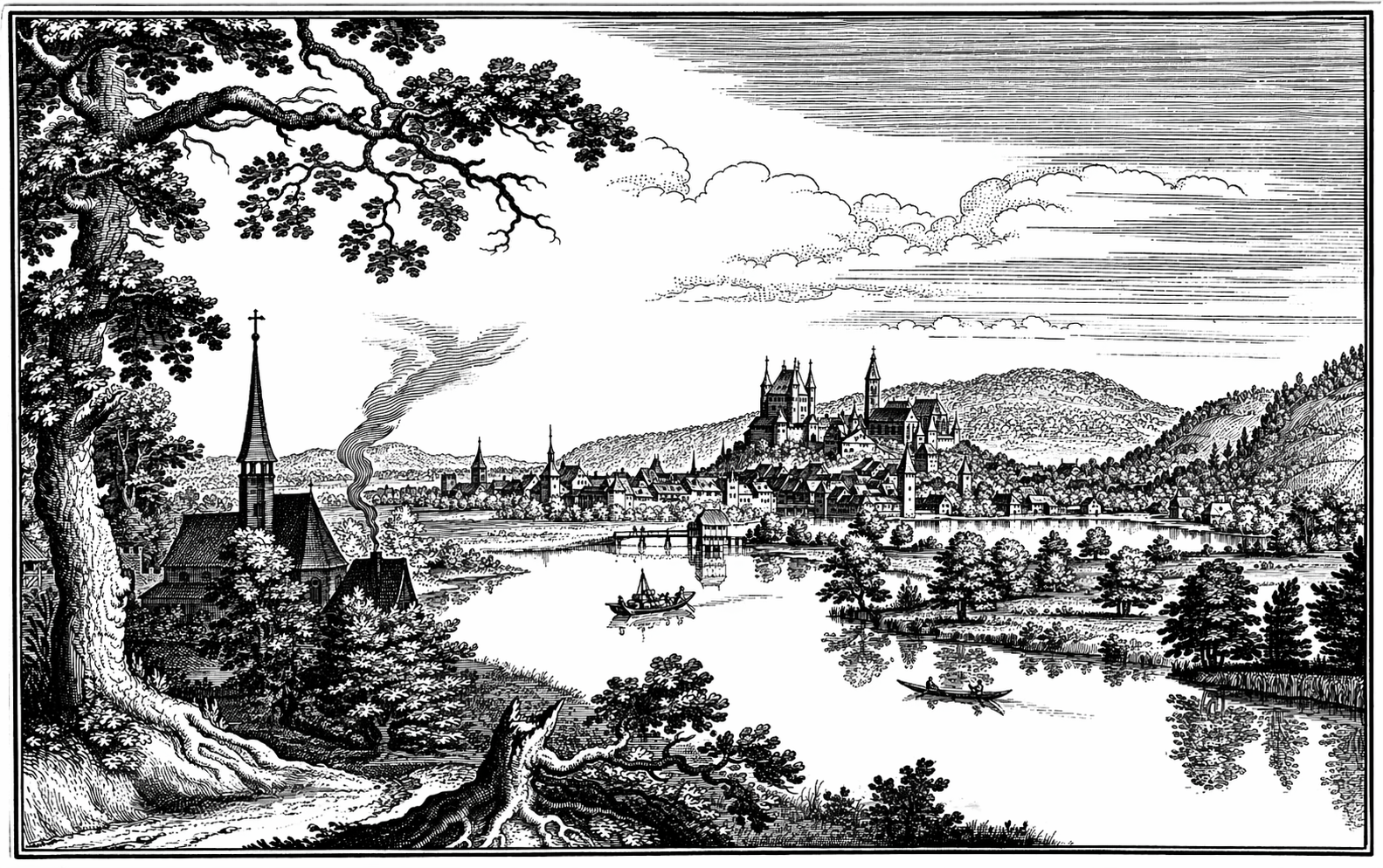
Shrine-town hub
Shrine-Town Hub
A compact starting hub built from chapel, shrine-support, road, market, and guild-adjacent artwork.
Player work: Spawn, inspect the failed road marker, learn the first shrine rite, read the map board, and post materials to the guild project.
Road and forest approach
Road and Forest
A path of grass, stones, black trees, bridges, and white fog. It teaches the first rule of the route: a mapped road can still betray you.
Player work: Watch bridges fail into fog, find hidden entrance markers, and face the first Road-Bound pressure outside town.
Cursed chapel and shrine ruin
Chapel Ruins
A drowned chapel ruin where a hidden room appears only to the correctly disguised. Its map fragment proves the old routes are changing.
Player work: Use a Road-Bound-dead disguise to reveal the hidden room and recover the changed map fragment.
Sewer, cave, and under-town route
Cave and Sewer
A damp under-town channel where wells, sewers, cave stone, vermin, alchemy, and old roadwork cross below the town.
Player work: Solve the tunnel route, gather crystal dust, and learn how low monsters nest inside civic infrastructure.
Occult dungeon
Dungeon Rooms
Trap rooms, cursed props, dungeon objects, crystal locks, and the first major route threat waiting behind the recovered fragment.
Player work: Carry the fragment into a combat route, survive traps and locks, defeat the route threat, and bring back the relic proof.
Guild hall and workshop cluster
Guild Hall and Workshops
Forge, herbalist bench, glasswork, ledgers, and order boards. Here recovered materials become route hardware and town upgrades.
Player work: Craft route tools, repair the route marker, and turn dungeon salvage into a town upgrade.
Market, shop, and tavern support
Market Square
Shopfronts, market citizens, tavern rooms, and service counters show what restored routes mean for ordinary town life.
Player work: Buy supplies, post orders, hear rumors, and unlock local services after the route becomes reliable.
Ruin threshold
Ruins Gate
A ruined court threshold of crystal-law inscriptions and sealed authority. When the route is proven, the gate becomes visible again.
Player work: Use the road charter, restored marker, or remembered name to prove the route and unlock the next region.